Favorite Travel Quotes

"Travel is fatal to prejudice, bigotry, and narrow-mindedness, and many of our people need it sorely on these accounts."
-- Mark Twain
Innocents Abroad

"Stop worrying about the potholes in the road and celebrate the journey." -- Fitzhugh Mullan

"A good traveler has no fixed plans and is not intent on arriving." -- Lao Tzu

In Whitehorse, Yukon Territory, the Beringia Center Allows us to Relive Personal Adventures From an Ancient Landscape

posted: July 3rd, 2009 | by:Bert

©Bert Gildart: In Whitehorse, Yukon Territory, there’s an interpretative center that has so influenced us that we have made summer-long boat trips into the area it represents. Once this ancient area connected Russia and Alaska and the center interprets that great connection.

90544

Beringia Center helps bring the distant past alive

The land is known by several names. Some call it the Berring Land Strip, but I prefer the the word Beringia, which is the name of the center, specifically the Beringia Center. Its purpsose is to interpret this area that once exsited about 10,000 years ago, focusing to some extent on the “mega fauna.” We’re familiar with many of their forms, but their size astounds us, for some were two and three times as large as what their counterparts now are today.

The center also interprets the tribes of Native Americans and their ancestors who might have followed these species, and many wound up in the area we now call Old Crow. That’s the area to which we boated, but you don’t have to embark on such a trip, for, today, the Beringia Center will help you appreciate this mega fauna, which includes saber tooth tigers, wooly mammoths, giant beaver and the gigantic short-faced grizzly bear.

SarahA-Orginal

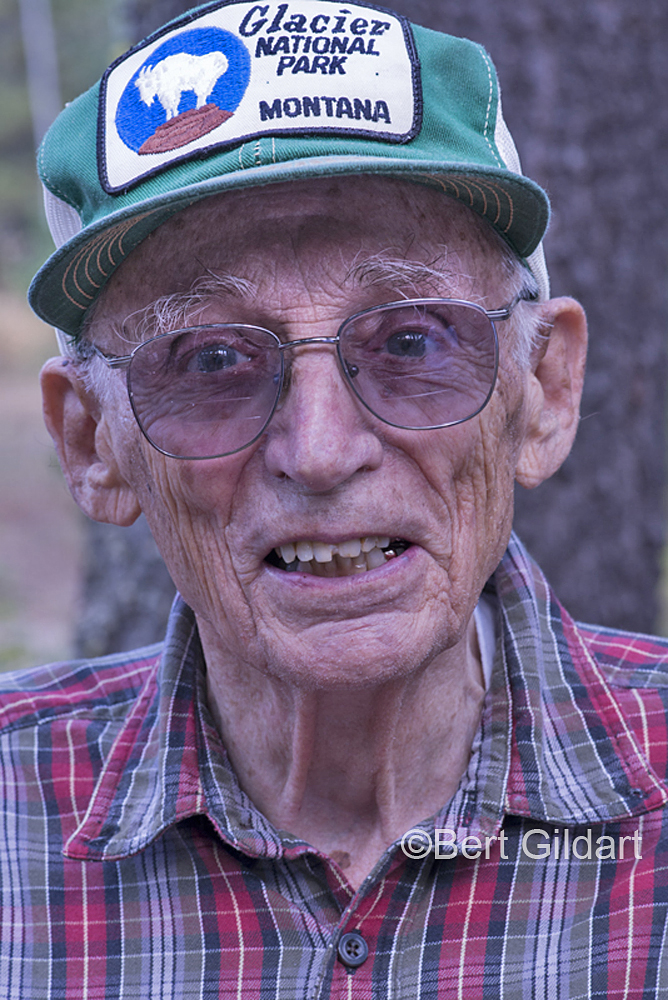
One of my proudest moments as a journalist was photographing Sarah Abel at Old Crow. Some said she was 103 at the time.

As well, the Beringia Center provides the words of these elders, though some have now passed away. But while they lived they provided insights into this bygone world, and we feel privileged to have once heard their voices and listened to their thoughts, now posted in the center and heard in the interpretive movies offered at the Beringia Center.

“LOTS OF DANGEROUS ANIMALS…”

Just how long ago some of these creatures died out is not known for sure, but elders from Old Crow, such as Sarah Abel and Charlie Peter Charlie, all say that their ancestors recall a time when the animals were much larger. “Our fathers,” said Ms. Abel, “all say animals much bigger when they hunted.” Then she starts in on a story about a huge beaver.

Peter Charlie (a man I photographed several years ago) agree that animals were much bigger: “First I’ll tell you,” said Peter Charlie, is that long, long ago, lots of dangerous animals lived here long ago.” What’s implied in all this, of course, is that animals have been decreasing in size for the past few thousands years.

90536

Life-like figures depicting ancient scene at Blue Fish Caves (two Nikon SB-800 Strobes).

Over the years I’ve photographed both of these individuals on various occasions. However, the last time I photographed Ms. Abel was in 1998, and sadly she died the following year. At the time, some say she was 103 or 104 (in those times no one kept records), but what is so remarkable is that her life spanned one century, touched another and, and then, finally, almost–but not quite–ended in another.

Janie and I met both Peter-Charlie and Sarah Able following a several week-long boat trip up the Porcupine River to the small village of Old Crow. (The trip was part of a four-month trip along the Yukon and Porcupine rivers.) At the time, we knew we had entered a remote country, but we did not realize that Old Crow was a part of this ancient land mass known as Beringia. Perhaps we should have known, as several natives showed us huge tusks taken from along the banks of the Porcupine and the nearby Old Crow River.

images

Atlatl

Interpretations of all this is what you’ll find at the Beringia Center, and is one of the main reasons Janie and I again stopped in Whitehorse. Included are panels showing people from Old Crow; life-size models that look extremely real of an ancient people dressing out a caribou. All of this is back-dropped by Blue Fish Caves, which is also reached from along the Porcupine River. This is an ancient and, essentially, untouched land.

THE ATLATL

The Center also offers personal involvement, and Brad, one of the naturalists, allowed us to try our skills with the atlatl, an ancient hunting devise that takes a spear, then links it to a lever arm which increases the thrust by several times of the spear. The image I’ve included here shows the setup and was taken from a free site featuring the atlatl.

90543

Trying my hand throwing atlatl, an ancient weapon.

Others spectators tried it, but I’m very happy to say that I optimized the lever arm better than did others, enabling my spear to travel further. My conclusion is that I was born in the wrong age, and am now awaiting the return of this ancient landscape. Of course, it’s all a dream, but I can come close by returning to Old Crow–or by visiting the Beringia Center in Whitehorse, Yukon Territory.

__________________________________________________________

THIS TIME TWO YEARS AGO:

*Badlands

ADS FROM GOOGLE AND AMAZON AUGMENT OUR TRAVELS


Read Comments | Post a Comment »

Reflections On The Alcan From Tok, Alaska

posted: July 2nd, 2009 | by:Bert

©Bert Gildart: Tok, Alaska, where Susan Butcher trained her dogs to compete–and win–in the famous Iditarod race is not a bad place to spend one’s birthday, as I’m doing today. Many know that it is my birthday and have written–or called–to inform me that if I were a dog, I would be hundreds of years old.

How cruel!

Many have also commented on the fact that we’ve posted so few blogs, noting that the country we’re traveling through deserves more, and that’s true. But there’s a problem, and in part, it’s because the area is so remote. Here, we can not use our Verizon card as it would have been prohibitively expensive to buy into the Canadian plan. That leaves no other alternative but to find Internet Cafés or campgrounds with WiFi, but again, because of the remoteness of the country, such places are few and far between. End result, few posts. And that’s too bad as the country truly is spectacular and is something I would have liked to have reported on at the time.

90540

Traveling the Alaskan Highway, just north of Whitehorse, Yukon Territory

Since leaving Whitehorse, Yukon Territory, the road through this segment is one which has all been built on permafrost. That means the ground beneath the road freezes and thaws each year-shifting and buckling as it does. As a result, sections of the road must be rebuilt each year, and if you are pulling a trailer, you simply can not drive fast.

DUST-COVERED AIRSTREAM

As well, you must anticipate that you will encounter long sections that are covered with gravel and that are extremely dusty. Pilot cars lead you through these areas, which may be as long as 15 miles. However, because the government is so diligent, we have sustained no dents (knock on wood) at all, just an Airstream that is thoroughly covered with dust.

90537

Historic steamboat used during gold rush now permanently moored at Whitehorse

The towns we’ve passed through, though called “towns,” are really little more than settlements, and here are some examples that caught our attention.

Destruction Bay is located on the shores of the 60-mile long Kluane Lake, and was one of the communities used to supply the army during the construction of the Alaskan Highway. It got its name when a violent storm destroyed buildings containing much of the construction material.

Burwash Landing, also on the shores of Kluane Lake, was almost blackened by a fire. In 1999 fire consumed the area, and the conflagration came within 30 feet of the settlement when suddenly the winds changed directions and the town was spared.

Those are just two examples of villages at which we’ve stopped, but on the way back we’ll be exploring other places as well. That’s another reason we’ve been hurrying along the Alcan as we have commitments in the Fairbanks area and know we’ll be repeating our travels later this summer or early in this fall.

90542

Stunted black spruce, shallow lakes and lofty mountains characterize country south of Tok, Alaska.

One final note: Though there are many RV campsites along the way, we’ve generally opted for campgrounds designated “Government Campgrounds.” All the campgrounds are nice, but the Government ones are generally more like ones found in the national parks of the U.S. and Canada, meaning that you have more elbow room.

And now, I’m going to close this posting and begin work on the next one, which will describe a place along the Alcan that has become very special to us. In other words, I’m trying to catch up…

______________________________________________________

THIS TIME TWO YEARS AGO

*A  New Great-blue Heron Rookery

ADS FROM GOOGLE AND AMAZON AUGMENT OUR TRAVELS


Read Comments | Post a Comment »

Slow and Easy–That’s the Way To Travel the Alaska Highway!

posted: June 28th, 2009 | by:Bert

©Bert Gildart:  The Alaska Highway is a 1,597-mile-long two-lane highway that stretches from Dawson Creek to Fairbanks. Much of the area through which it passes remains similar to the wilderness Canadians and the U.S. Army plowed through in 1942, taking 11 months to complete the monumental project of creating a road. Through primitive by today’s standards, the “highway” was deemed necessary after the Japanese bombed Pearl Harbor on December 7, 1941. Military experts were concerned the Japanese might invade Canada, the Aleutians and other parts of Alaska–and they needed a way to move troops. Today, that “wild road” now helps recall a frontier type of life that was at times raw, and sometimes very lonely–as suggested by the legacy of one man, which now attracts visitors from all over the world.

When Janie and I first drove the highway in 1991, the road was twisty and curvy, but to honor the 50-year anniversary of the Alcan (Alaska-Canada Highway) much money was spent shortly after our first adventure to convert the old road into a more modern day one. Today, we believe the surface is good enough for Airstream owners to pull their trailers–and to enjoy one of the greatest adventures still remaining to RV travelers.

90520

Travel slowly and you'll see more wildlife, such as the Stone Sheep, one of the four species of North American wild sheep.

Yes, you’ll have to travel slowly because of periodic frost heaving, but that will only allow you to see more wildlife–and enjoy the wild beauty the several provinces, and finally the state of Alaska, provides.

MOVABLE FEAST

What you do as you travel this historic route will vary according to your interests. Our itinerary calls for stops in Whitehorse, Denali and finally Skagway–to hike the historic Chilkoot Pass. As well, we also plan to see our many Gwich’in Indian friends in Fairbanks; and while in Fairbanks, I have obligations to magazines and will be covering the World Eskimo Indian Olympics in mid July. But our time is here and now-and it is the many things seen along the way that make this trip worth the while, for there’s a history of wildlife and a legacy of characters. In fact, the entire trip could be called a “movable feast.”

Highlights of our trip have been many and as time goes by we may find enough Internet Cafés and campgrounds with Wireless connectivity to detail more of the exciting features we’ve enjoyed. In the meantime, I believe Janie and I would agree that our stop at Liard Hot Springs ranks high. So, too, do the sightings of all the wildlife (bears) and the Stone sheep-and this latter for a very good reason.

Throughout North America there are four different species of mountain sheep (Dall, Bighorn, Desert Bighorn) and the Stone Sheep is another. (I described the species in my book published by NorthWord on Mountain Monarchs.)

LEGACY OF CHARACTERS

But we’re also interested in the history of the Alcan and in some of the characters who left their marks. At this juncture in our journey the Sign Post Forest in Watson Lake, Yukon Territory, fits that bill.

90532

Sign Forest, growing daily and now containing over 55,000 signs posted from all over the world. Started in 1942 by a lonely G.I. who was working on the AK Highway.

The Signpost Forest dates back to 1942 when Carl Lindley, a homesick G.I. from Illinois was working on damaged signposts. Thinking perhaps of his sweetheart back home, he erected a marker showing the distance to his hometown in Illinois. For some inexplicable reason, the posting caught hold and today, the “forest” includes over 55,000 signs that come from all over the world.

Next stop may be Whitehorse, for the lady at the Visitor Center said it was an “easy” 5 to 6 hour drive.  But we’ll have to see about that, for we’ve discovered most travel much faster than we do, and typically to cover the 280 miles she’s described, will take us a day and a half. We’re slow, and to see all the sights–to meet all the characters from the present-and past!–we believe that’s the way to travel the Alcan.

____________________________________________

THIS TIME TWO YEARS AGO:

*Knife River is Archaeologist’s Dream

ADS FROM GOOGLE AND AMAZON AUGMENT OUR TRAVELS:


Read Comments | 2 Comments »

Is It a Black Bear or a Grizzly Bear?

posted: June 26th, 2009 | by:Bert

©Bert Gildart:  At first Janie and I both thought we were seeing another black bear, but as we pulled our truck and Airstream onto the side of the Alaskan Highway, we both changed our mind.

“That could be a small grizzly,” Janie said. And I had to agree, despite the fact I thought it unusual for a grizzly to be near the side of a road. And although the Alaska Highway is remote, it still sees a fair number of cars, trucks–and even Airstreams–most every day.

90528

Is it a a black bear or a grizzly bear?

Not more than an hour ago, we had left Liard Hot Springs in British Columbia to continue our journey to Fairbanks and the surrounding area. For several reasons, bears were very much on our minds–and so were ways to differentiate g-bears from black bears. We’d also been thinking about bears because one of their preferred food items was so abundant–something I well knew.

Years ago I had worked in Glacier National Park hired as an assistant biologist in the ennobling position as a scatologist. For three months I had gathered bear poop and then, later, in the park service lab, worked to identify the fecal material. The material was exactly like what Janie and I had been seeing the past few days at Liard Hot Springs. It was cow parsnip, but this was different.

TROPICAL OASIS

Because of the hot springs Liard was once referred to as a “tropic-like oasis.” Because of the warmth, cow parsnip is not only profuse in Liard, but it grows exceptionally high; and that may be one of the reasons we have seen so many bears in this area. In spring, it’s one of their favorite items of food.

90529

Cow parsnip, a favorite food of blacks and grizzly bears alike is profuse and grows exceptionally tall at Liard Hot Springs.

So far, this trip has been as much about bears as anything else. Five years ago when Janie and I drove the Alaska Highway, we saw very little wildlife, but this year we have seen bison, stone sheep, caribou, black bears and now we both believed, we were seeing a grizzly bear.

The reason we were not decided is because of the bear’s youth. This must be a very young bear, perhaps a two-year old; one that may have just recently been booted from the family. Most sows, after all, are again ready to deliver a new crop of young, and young from several years ago must go.

Though it’s hard to say with any certainty, this bear probably weighed just a little over 200 pounds, and that made it difficult to determine at first whether it was a g-bear or a black bear, particularly when it was not turned sideway. Even then, the hump was not very prominent, but because of the dished-in face and what we think is the beginning of a hump, we’re calling it a young grizzly bear.

Anyone have any thoughts?

NEWS NOTES: We’re traveling the Alaskan Highway trying to post blogs when we have access to the Internet. Tonight we do for the first time in almost a week. We’ve seen much and will try and catch up when we’re parked for awhile. Meanwhile, the service we’ve paid good money for (telephone service in Canada) is not working, and we’re wondering why? As a result, we can’t call out on our Verizon phone. We thought we were paying for our service to link with the towers most used in Canada. Maybe when we get to Whitehorse our service will work; right now we’re in Watson Lake, Yukon Territory.

_________________________________________________________________

THIS TIME THREE YEARS AGO

*Top Ten National Parks For RVers

ADS FROM GOOGLE AND AMAZON AUGMENT OUR TRAVELS


Read Comments | 3 Comments »

Bear Cubs Now “Battling” In Jasper National Park

posted: June 22nd, 2009 | by:Bert

90505

Not sure whether to go up--or come down

©Bert Gildart:  “Bears,” Janie said. “Black bears, and just look at those adorable little cubs. Three of ‘em!”

We were in Jasper National Park driving the tiny potholed road to Cavell Glacier (which we drove last fall), when Janie made her discovery. The bears were on a small wooded hill, out in the open, and they were all playing-though that’s not the way it appeared. First one would run over to a tree and assume a position that implied “climb.” Suddenly, another bolted over and attempted to pull it down. Several times it succeeded, then, on the ground they’d nip and snap, but without the force and anger needed to inflict real pain. These little guys were having a ball!

But what got us both was the size, and then we realized they probably had not been out of hibernation too long, and we recalled as well that all bears have a most usual method of fertilization.

DELAYED IMPLANTATION

Mating takes place in late summer, but sows store and delay final implantation of the sperm until their bodies are in a reproductive condition, which occurs in the fall.  Growth of the embryo then occurs, but there’s not much time before they’re born. As a result, when the cubs are born, usually in February, they weigh little more than a pound.

When we saw them just a day or so ago, none appeared to weigh more than 15 to 20 pounds. Little wonder cubs remain with the sow until they are almost two years old.

Unlike grizzly bears, black bears are excellent climbers, and as we watched the sow suddenly let out a grunt and all three scurried up trees, two in one. Seconds later several motorcycles roared up the road, and that’s apparently what had alerted the sow. When the cyclist passed the cubs descended and again we watched them and photographed them.

Though I’ve often seen black bears (and grizzly bears, for that matter), never have I seen a black bear with her cubs for such an extended period. What was particularly interesting is that one of the cubs was brown in color while the other two were black.

TRYING TO OBSCURE OUR INTENTIONS

We continued to watch and photograph them for well over an hour. Each time we’d hear a car approach, we’d turn as though we were removing something from the car. As well, I’d scurry with my tripod mounted lens to the far side of our truck.

90507

Bear Cubs "battle," but it's all in fun.

From experience we both know that many people start yelling and screaming when they see bears, and that type of behavior certainly doesn’t benefit our cause.

Though Janie and I are not sure why the bears tolerated our presence for so long, we hope it was not because they had been fed. Generally when that happens bears loose all fear of people and begin showing up in campgrounds. Jasper National Park officials are working hard to prevent that occurrence and all of their campgrounds are designated “Bare Proof Campgrounds,” meaning they are barren of food when campers are absent. If not offending items are confiscated, campers may be issued a citation and in some cases, asked to leave.

90511

Mamma looking on over three cubs

We worked with extremely long Nikon lenses (400 to 800mm) and are delighted for the rare opportunity that presented itself while in Jasper National Park. This park never fails as we learned last fall.

NEWS NOTES: We have no connectivity so our postings are being made from Internet Café’s-when we can find them. At the moment I’m in LouLou’s Pizzeria in Jasper, Alberta.

__________________________________________________

SEVERAL YEARS AGO AT THIS TIME

*Never A Bad Day At Logan Pass

ADS FROM GOOGLE AND AMAZON AUGMENT OUR TRAVELS

Read Comments | 1 Comment »

Heading For Alaska

posted: June 18th, 2009 | by:Bert

©Bert Gildart: Departing tomorrow for Alaska, and it seems appropriate to post of few photographs from one of my favorite north-country settings, the Arctic Refuge, a place we’ve visited literally dozens of times. During those times we’ve seen grizzly bears, wolverines, thousands of caribou, and one day, we awoke to a snow storm. But it quickly lifted and left us basking in a wonderland.

ArcticDryad

Arctic flowers, it's all about adaptation to harsh conditions.

Two of my favorite photographs from that ADVENTURE include the ones posted here. Somehow these plants have evolved to survive harsh winds and cold temperatures. Look, for instance at the arctic dryad engulfed with snow.

No telling what features we’ll see this time, but we’re exciting about traveling the Alcan and then getting to Fairbanks and seeing our many Gwich’in Indian friends, with whom we lived for a number of years.

NORTHERN-MOST TRIBE OF INDIANS

The Gwich’in, for those of you who don’t recall from my many previous postings, are the northern-most Indian tribe in America (Eskimos live further north) and they have fought a wonderful and telling battle to preserve the core calving ground of the Porcupine Caribou herd, which is located in the northern part of the Arctic Refuge.

ArcticDryad&Kongakut

Beatuty of the Arctic Refuge, about 15 miles from Arctic Ocean

We’ll be posting as we go–and when we can find Internet Cafes. It’s expensive to purchase Internet access time through Verizon, but we’ll do the best we can to find cafes.

___________________________________________________

THIS TIME THREE YEARS AGO:

*Keeper of Kintla (This post continues to generate comments)

ADS FROM GOOGLE AND AMAZON AUGMENT OUR TRAVELS:


Read Comments | 3 Comments »

Colorful Avocet Has Returned To Montana’s Prairie Wetlands

posted: June 15th, 2009 | by:Bert

©Bert Gildart: All across the wetlands of eastern Montana, the American Avocet has returned, has laid its eggs and is ushering its young into the world. These are colorful birds and you will recognize them the moment you see them.

90120

Colorful Avocet has returned to Montana's prairie wetlands.

Because they are wading birds, they have long, thin gray legs, which give the species its colloquial name, “blue shanks.” Plumage is black and white on the back with white on the underbelly. But setting it off in the summer is the bird’s orange-colored head.

The other conspicuous feature is the long, thin bill which is upturned at the end. This feature helps the avocet locate food, something that is fascinating to watch and which I have seen often. Inserting beaks into the marsh, the avocet will stir the water, creating as they do a mini cyclone effect which draws aquatic insects up from the bottom.

PRECOCIAL YOUNG

Unlike the pelican of several posts ago, young of this species are fully capable of foraging for themselves shortly after hatching. Such birds are referred to as precocial.

90121

Avocet young are precocial, meaning they are completley mobile shortly after hatching.

Pelican young, on the other hand, are helpless when hatched and require weeks of care before they can fend for themselves. Such birds are referred to as altricial.

Like the pelican, avocet nests on open ground, often in small groups, sometimes with other waders. A pair will rear one brood per season, with both male and female providing parental care for the young.

Because summers on the prairie can be so short, the time to enjoy this species in now, for all too soon, it will head south, taking with it that colorful splash of orange that helps add color to a setting that might otherwise be quite drab.

PHOTO TECHNIQUES

These photographs could not have been made without the use of a photographic blind. I made these photos several years ago at the Bowdoin National Wildlife Refuge over a period of a couple of days.

First I erected the movable blind some distance from the nesting pair, and then gradually inched forward until I was close enough for the birds to fill the viewfinder of my Hasselblad camera and the 500mm lens I was using at the time. Later, the images were used for a book I wrote on Montana Wildlife, used by several professors for their classes in wildlife management at local universities. Images such as these continue to sell through several photo agents who market my work.

NEWS NOTES:

About five more days until departure for Alaska, which will take us along the world-famous Alcan Highway. We’ll be providing extensive coverage. Obviously we’re excited and have made plans to see many of our Native friends. While there I’ll be covering the World Eskimo Indian Olympics. As well, we’ll be hiking the Chilkoot Pass.

_____________________________________________________

THIS TIME TWO YEARS AGO:

*Kayaking Can Extend RV Adventures

ADS FROM GOOGLE AND AMAZON AUGMENT OUR TRAVELS


Read Comments | Post a Comment »

Arctic Refuge Still Safe, Despite Alaska Senator Lisa Murkowski

posted: June 11th, 2009 | by:Bert

©Bert Gildart: Several days ago Sen. Lisa Murkowski’s Arctic Refuge drilling amendment (the so-called “Directional Drilling” bill) was voted down, 13 to 10.  This bill, according to an Arctic Action news release, “would have cracked open the Arctic Refuge coastal plain to oil leasing and development and undermined the fundamental purposes of the refuge to preserve wilderness and wildlife.”  (For my stories on the refuge see: ANWR1, Mendacity, Role of Sarah James)

Sen. John McCain sustained his long-time support of keeping the Arctic Refuge a true Refuge!

Arctic Refuge

Arctic Refuge provides cotton grass--an essential food for caribou. This photo purchased from me for display at a Denali Visitor Center.

Obviously, there was a debate, at which time Sen. Murkowski insisted that there would be “no impacts” within the Refuge. Although she mentioned there would be winter seismic exploration, she failed to note that it would harm critical and threatened polar bear habitat.

We’re glad the refuge will remain a refuge.

PLEASE PROVIDE YOUR THANKS

Please join us in thanking these Senators who voted to keep the Arctic Refuge wild and free of drill rigs:

Chairman Jeff Bingamen (D-NM), Sen. Byron Dorgan (D-ND), Sen. Ron Wyden (D-OR), Sen. Time Johnson (D-SD), Sen. Maria Cantwell (D-WA), Sen. Robert Mendendez (D-NJ), Sen. Blanche Lincoln (D-AR), Sen. Bernard Sanders (I-VT), Sen. Evan Bayh (D-IN), Sen. Debbie Stabenow (D-MI), Sen. Mark Udall (D-CO), Sen. Jeanne Shaheen (D-NH), and Sen. John McCain (R-AZ).

You can find their web form for e-mails here:

http://www.senate.gov/general/contact_information/senators_cfm.cfm

______________________________________

THIS TIME THREE YEARS AGO:

*So You Rolled a Kayak

ADS FROM GOOGLE AND AMAZON AUGMENT OUR TRAVELS


Read Comments | Post a Comment »

A Baby Pelican’s Big Gulp

posted: June 10th, 2009 | by:Bert

©Bert Gildart: Pelicans in Montana? You betcha, and though not as abundant as the brown pelicans of Florida, still huge colonies of adult white pelicans seek out Montana, migrating from distant places in the South as well as from Mexico. In fact, they’re here right now, and they’re taking care of their young.

Most, but not all young pelicans have hatched, and when they do, they are helpless. An ornithologist would term this type of condition altricial, as opposed to those born perfectly capable of fending (at least somewhat) for themselves–or precocial. They need protection from predators and that’s one of the reasons adult white pelicans seek out specific types of islands, and those islands are found only in the vast prairies of western North America. Some of the best are found in Montana.

FLAT TREELESS ISLANDS

Adult white pelicans seek small isolated islands that are flat, devoid of vegetation and that are surrounded by large bodies of water. What they need is isolation from coyotes, foxes, raccoon and other similar types of predators.

In Montana, there are but few remaining and most are all found on national wildlife refuges, such as Bowdoin. There is also a huge colony on the Molly Islands in a remote region of Yellowstone Lake in Yellowstone National Park.

13484

Deep inside the gular pouch a young pelican takes a big gulp of food brought back by one of its parents.

Conditions such as just describe are mandatory for the survival of pelican young, which are born naked, incapable of foraging for themselves, and certainly not capable of protecting themselves through flight. By contrasts, precocial birds, such as the avocet, are pretty much capable of taking care of themselves. When hatched, they have feathers and are born with their eyes open–or soon to be opened.

BIG GULP

If you could visit one of these islands what you’d see is pretty much depicted in the accompanying photograph, i.e., a huge colony of white pelicans. And scattered here and there you’d see young pelicans trying to suck out food from the adult’s gular pouch. In other words, you’d see these young birds trying to nourish by inserting their heads as far into the parent’s throat as it will allow.

In other words, you’d see them trying to take the big gulp.

PHOTO TECHNIQUES

Photo taken on remote island in eastern Montana from inside a blind and over a several day period of time. Much waiting involved as well as the use of a long telephoto lens (600mm). Long lenses necessary to eliminate stress on birds. It’s also necessary to arrive early in the day and depart late, again, so as to reduce stress on birds.

NEWS NOTES:


About 11 more days until departure for the ALCAN (Alaska-Canada Highway) which will take us to Fairbanks in our Airstream. Upon arrival we’ll be covering a number of events to include the World Eskimo Indian Olympics.

__________________________________________

THIS TIME THREE YEARS AGO:

*No Table Manners Among Turkey Vultures

ADS FROM GOOGLE AND AMAZON AUGMENT OUR TRAVELS:


Read Comments | Post a Comment »

Hitch Weight, Tongue Weight, Trailer Weight and Other Arcane Parameters

posted: June 5th, 2009 | by:Bert

©Bert Gildart: This past year Janie and I talked to several people who have had bad experiences with tires and hitches. We’re included in that group and about a year ago I posted a blog on the difficulty we had with a cracked receiver. Before heading for Alaska, we want to make sure everything is loaded correctly.

Yet another Airstream user, Tom, related a story about the factory installed hitch on his Chevy, which had actually cracked and then fallen off. And now, just a few weeks ago, I took a tire into my local service man, and he said one of the tires was not wearing proper, and that perhaps we’ve over loaded the trailer. I don’t think so, but soon we’ll know for sure.

38415

NATURE CORNER: Live in the Northwest and now hearing a drumming in the woods that sounds like a motorboat? It's only the ruffed grouse, standing on a log, pounding out a warning, saying, in essence, "This is my territory; stay out!" High-speed strobes helped to arrest beat of wings.

With those concerns in mind, I’ve talked to a number of service people to determine if we might have any potential problems. Bottom line, it doesn’t appear that way, and here’s how we know.

FEEL SAFE

First, I made a visual examination of the factory hitch that came with our Dodge heavy duty ¾ ton pickup, and found nothing that should concern us. As well I called my Dodge dealer and the service people there said they had never “in their entire history” had a problem with a customer’s hitch. That makes me feel safe, but doesn’t mean I’ll stop making periodic inspections. After all, by inspection, we discovered the cracked stinger (link above), and that should never have happened.


282628242823

Captions for above, which you should click on to enlarge and to see techniques: Left, shows easy set up; middle shows scale and downward force of tongue but NOT the hidden support (which is actually the fulcrum); right, shows scale and uncalculated weight, which is obtained by multiplying shown weight of 200 by length of 4×4, which is actually 4 in my case. Diagram shows 3 feet from trailer jack, but that’s OK as instructions say to multiply scale weight by length of board from fulcrum to other end support, which is the scale.

Since that time, we’ve vastly upgraded and now have a Hensley Arrow Hitch and the heaviest duty arrangement they offer. However, because of the problems Tom had, he upgraded the Chevy receiver hitch by replacing number 5 bolts with number 8 bolts and having a welder reinforce factory welds with reinforced welds. He says he’ll now drive with peace of mind.

EASY PROCEDURE

After inspecting the factory hitch for weak areas, I, too, feel I can drive with peace of mind, but that’s because of my evaluation. I also wanted to know tongue weight, vehicle weight and the weight of the trailer, and I’ve just obtained one of those parameters. Using a technique outlined in the Airstream manual, I’ve determined tongue weight, and because I have yet to talk to anyone who has gone through this little exercise, thought I’d include photos, showing just how easy the procedure can be. You’ll need a 4-foot 4×4, two short pieces of heavy duty piping, scales and a piece of board about the thickness of your scales.

In the manual, Airstream says you can use a longer 4×4 then what they show in the above diagram, and that all one must do is multiply the board’s total length by the weight shown on your bathroom scales. They use a three-foot 4×4 while  I used a four-foot-long 4×4; otherwise everything shown in the diagram remained the same, meaning tongue weight for my Safari LS with slideout was 800 pounds, almost exactly, as shown above.

Before we depart for Alaska, and once we’re fully loaded, I plan to drive pickup and trailer to a weight station, and then I’ll know whether or not we are overloaded.

____________________________________________

THIS TIME THREE YEARS AGO:

*Rolling a Kayak

ADS FROM GOOGLE AND AMAZON AUGMENT OUR TRAVELS:


Read Comments | Post a Comment »

Guns Not This Person’s Choice; Might Consider Pepper Spray

posted: June 2nd, 2009 | by:Bert

©Bert Gildart: Here’s another lengthy comment from a reader who preferred to remain anonymous. This person’s thoughts add yet another perspective on this subject of dealing with prospective violence in campgrounds. The subject is one I’ve been covering in the four postings prior to the one on Virgil Ware, and which has generated much interest. (Protective Measures, Ranger Patrol Turned Violent, Defensive Measures, More Thoughts on Hostile Behavior)

The individual’s comments read as follows:

I’ve been following your latest blogs with great interest.

After your first blog, I was bracing myself for a host of responses from others suggesting that the best way to “be secure” is to carry a gun or some other lethal weapon. I’m often asked by fellow campers whether we travel with some sort of weapon. These seem to be an ice- breaking statement made by people who have already chosen to pack heat. When I answer “No,” inevitably I’m told about their gun and why they carry it. They usually try to convince me to get a gun, too.

12726

Because of the importance I've placed on this issue of potential violence the other topics I often cover have been neglected... and I want you new readers to know that wildlife, natural history and adventure travel, generally with our Airstream--as seen through my photographic lens--is often the subject of my posts. To remedy: right now, here in Montana, blue grouse are now displaying for the females and attempting to stake out their territory. One good place to see this annual ritual is the Many Glacier Valley of GNP.

So I was pleasantly surprised at the opinions expressed by your contributors, who both talked about non-lethal ways to de-escalate a potential situation. In our years of travel, we never once encountered a situation in which anything truly threatening occurred.  Those few times that we were concerned, the “threat” was all in our minds. In my experience, campgrounds are generally safe places.

Many people would say we were just lucky, and I’m sure there’s some truth to that. But it is also true that we prevented situations from occurring by being diligent in researching places before we went, aware of our surroundings when we arrived, and cautious about situations that popped up during our stay. Our Airstream has wheels, and there is no point in sitting still next to bad neighbors like a housebound person might. If in doubt, move on.

“GUNS NOT OUR CHOICE”

While several friends travel with lethal weapons (mostly handguns), that’s not our choice. As your first contributor points out, there are very few situations in which lethal force is necessary, and many more times where it would be a huge mistake. I don’t want the temptation to make a huge mistake sitting in my trailer. Experts also say that brandishing a weapon you don’t intend to use is a mistake as well.

PREFERS PEPPER SPRAY

On the other hand, I’m a fan of non-lethal defenses like pepper spray. We used to travel with a small can, but it got confiscated at the Canadian border during a trip. We should probably get a replacement.

Bill makes a good point as well. People’s impressions can be formed on scant detail: how you dress, who you’re with, what your trailer looks like. It is just as easy to form a positive impression as a negative one, and we always try to do that. Introducing yourself to neighbors is always a good idea. Being friendly and flying a flag tells people, “I’m not a threat,” and letting people know who you are often means they’ll look out for you.

I often see people who are their own worst enemies. They shun others, scowl into other people’s campsites, never smile, and generally give off the impression that they are unpleasant. Troublemakers looking to harass another camper will generally aim for the target that seems most deserving of abuse. Don’t be the grumpy guy who yells at people for crossing his site. Don’t be the couple that pretends they didn’t see your friendly wave as you walked by. Don’t grab the children and tell them to go back to the trailer just because somebody with a tattoo is in sight. If you act fearful, you may just attract that which you fear most.

Thanks for covering this topic.

NOTE: Continued contributions are welcome on this subject of violence in our campgrounds, but in the meantime we’ll be switching topics, moving on to plans for our upcoming trip to Alaska. There’s much preparation required and I’ll be discussing a bit of that in my next posting. We’ll be departing in about three weeks.

________________________________________________

THREE YEARS AGO AT THIS TIME:

*Training People To Watch Bears

ADS FROM GOOGLE AND AMAZON AUGMENT OUR TRAVELS


Read Comments | Post a Comment »

Artist Elizabeth Scism and the Legacy of Virgil Ware

posted: June 1st, 2009 | by:Bert

©Bert Gildart: Experience shapes personality, and for me a particularly profound event occurred in 1967 when two girls were fatally mauled in a single night.  Because of my involvement in one of those tragedies, my thinking about certain aspects of park management was forever changed. It was something I was able to express in a magazine story written for Smithsonian Magazine.

Two other events have also impacted my thinking. One occurred just off the Natchez Trace in Oxford, Mississippi, and that was a trip I made to Ol’ Miss at the time when James Meredith, a black person, was seeking admission. His quest prompted riots and generated a form of hatred I had never experienced before.

ARTIST’S RESPONSE

There’s yet another experience, and that occurred on a lonely road just outside of Birmingham, Alabama. This event was particularly tragic, as it resulted in the death of a young black boy, Virgil Ware. Aside from his brother, I was the last person to see Virgil alive–and was there as he died. He’d been shot by two white boys filled with hate that so permeated the Birmingham area that violent day. Like the other two events, the tragedy became the subject of a blog, but unlike the other two postings, this story elicited response from an artist.

VirgilWare

Virgil Ware and the four little girls surrounding him died a tragic death in a single day in September of 1963. Artist/teacher Elizabeth Scism has preserved their memories in this haunting rendition.

Elizabeth Scism is an up-and-coming artist from Tennessee who teaches creative writing and American Literature. In her spare time she devotes time to the artistic rendition of people from the Civil Rights era. One of those is Virgil Ware.

Just why a relatively young artist has chosen to focus on men and woman from the Civil Rights period is something that may be more thoroughly revealed as time goes by. Regardless, Elizabeth has provided an insightful rendition of this young boy, killed when he was but 14.

GREAT PROMISE

Looking at her rendition, we see a young man with a strong face–one that appears to have been full of promise. Originally, Elizabeth told me that she had considered back-dropping him with a bicycle, for he had been riding on the handlebars as his brother peddled. But she changed her vision to one that included the four young girls killed that very same day. The girls had been in a church when the building was bombed, and to my way of thinking, her choice was a good one, for they all died from the same hostilities that characterized those times.

Elizabeth says that after searching the internet for hours she finally found a high-quality photo-collage of the four girls and that she decided to use that rather than the bike. She says she thought the bike might look bizarre–and that she “was more confident drawing faces anyway.” She goes on to say that one of her students gave her Photoshop and that she used the program to help her figure out what she wanted the final work to look like on the computer before she actually started drawing.

“Your question,” writes Scism, “about why I do this is that I am fascinated by faces… My heart also happens to go out to many of the people I’ve drawn, Virgil among them. He looks so vulnerable, like a little rabbit.”

Elizabeth says she hopes one day to have a showing of those impacted by the Civil Rights movement, and Janie and I wish her well. We think her subjects are poignant and are flattered she’d share one of her images with us. We think she’s onto a subject that matters still. For more on her work, go to Deviantart.

_______________________________________________

THIS TIME THREE YEARS AGO:

*Denali National Park

ADS FROM GOOGLE AND AMAZON AUGMENT OUR TRAVELS


Read Comments | 1 Comment »

More Thoughts On Dealing With Hostile Behavior

posted: May 30th, 2009 | by:Bert

©Bert Gildart:  What follows is advice provided by Bill D, a fellow Airstream owner and a gentleman I met this winter in Anza Borrego. Bill and his partner Larry are well educated, and have enjoyed successful medical careers. Bill worked as a charge RN for the Veteran’s Administration Hospital. (To understand why he has contributed his thoughts, scroll down and read my three previous posts.)

DSC_2980

Janie and I have sought out America's most remote areas, and 99.9 percent of the time have ALMOST always felt secure. We'd like to think it has something to do with prepardness.

Now retired, both have developed an interest in history, much being devoted to the highly unusual life style of Marshall South, a man who took his family into the wilderness for 17 years. Bill, who shares my enthusiasm for South, has helped me with research, and  I count him among my friends.

From his home at Yaquitepec, South wrote hundreds of magazine stories and penned several novels, and Janie and I have written about the family in several blogs (Post1…Forerunners of the Hippies?, Post 2, Lessons from Yaquitepec). Magazine stories will soon follow.

I have also reported on the life of Bill and Larry, and did so this past February (”Ghost Mountain or Brokeback Mountain? Maybe There Is No Choice” ). Because of their lifestyle they are in a particularly good situation to offer advice about violence, for they’ve experienced their share of hostility and have given much thought to defending themselves and to defusing hostile situations. Provided here are Bill’s suggestions on dealing with aggressive behavior, and the important thing is that his techniques seemed to have worked, as follows:

By Bill D: Your recent article, “When To Consider Protective Measures Against Hostility“, struck a chord with us (I think we touched on that topic briefly when you visited us at our campsite at Vallecito County Park).  During the past two years of camping, we have experienced that just having an Airstream trailer is an attention getter, and the image of two men living in it kicks it up a notch.  So our “antennas” are always on alert to detect any attitudes of prejudice and/or hate, which could also lead to violence, as was the case of Satendar Singh in a California state park.

We take preemptive measures such as saying “Hi” to our neighbors as we walk our dogs and take time to talk to those who appear approachable.  We have found that flying the United States Flag seems to have a pacifying effect on any nearby “rednecks” or potential troublemakers. Below are two incidents that we experienced that could have resulted in violence:

FlagRaising

As a former service man, Bill is patriotic, but also knows the American flag generates good will among some campers.

We were camping in the middle of the week in an almost empty, quiet wooded park near Julian, CA.  Late in the afternoon, several vehicles with men arrived across the park road from us and started to set up a tent while music was blaring out from their opened car door.  They started drinking and whooping it up with very loud talking, swearing and ugly laughing. Our Airstream was somewhat screened by thick bushes and we were flying the Earth Flag.  We contemplated the possibility of moving or returning home.

The next morning we raised the United States Flag on our high flagpole.  We were pleasantly surprised when one of the offending men walked over and thanked us for flying the flag. He said he was a Vietnam War veteran and appreciated it, and went on to apologize for their noisy behavior the night before.

On another trip, we were camping at the beach, which often attracts partying campers.  At first we thought we were lucky to have quiet neighbors, but when the neighbors of the site just on the other side of the bushes returned to their RV late in the evening after eating dinner in town, they proceeded to turn on very loud music that pulsated through our closed Airstream.
We contacted the Camp Host who talked to them.  They turned down the volume at 10 p.m. but I heard them laughing and talking loudly.  The music then returned and park rangers drove by and agreed that the music was too loud and they talked to the offending party. The music stopped and after the rangers left I heard them talk loudly about “those fags”.
I feared for our safety and the safety of our trailer.  So Larry stayed inside the trailer with the dogs while I stayed out in the dark near our Airstream and kept an eye on the trailer and any suspicious activity (I had an iron fire poker and ax nearby).  Around midnight I heard our neighbor’s footsteps approach and stop on the roadside of our truck. He shined a flashlight into our site, saw me, and he then returned to his RV. By 2 a.m. all was quiet and I retired.
The next morning I raised the American Flag high on our flagpole and we had no further problems with our neighbors, except for an occasional scowl from them as they walked by.  What I learned from this incident is that it is better to not complain or draw negative attention to a neighbor’s offending behavior (I’m sure it spoiled both of our evenings.)

As a preventive measure I try to find something neutral to say, an “icebreaker”, such as “Hi!” or “sorry for the diesel truck noise as I was getting the trailer in the right place”.  I am often pleasantly surprised when they say, “no problem” or “I didn’t even hear it”. That initial face-to-face neutral verbal exchange almost always seems to go a long way in reducing the apprehension that both parties undoubtedly experience when first moving in.  And, as mentioned above, flying the American Flag seems to help.  But if I felt we were in danger of violence, I would hitch up the trailer and put the outside gear back into the truck incase we needed to move early and quickly. Larry reports that people are not as receptive to him once they see that he is an Asian-American.

I agree with your assessment in your article, “Routine Ranger Patrol Turned Violent”, that economic hard times increase the likelihood of violence. I prefer to use the phrase, “potential perpetrators of violence”, rather than “Fringe Dwellers” (Marshal South was probably thought of as a “Fringe Dweller” by the community of Julian).  This morning I found an excellent book on this subject: Violence: The Enduring Problem, by Alex Alvarez and Ronet Bachman, Sage Publications, Inc., November 2, 2007.  The authors state that all violence, at some level, is the result of an “us” versus “them” mentality, and xenophobia, the tendency to have contempt for foreigners and other strangers, is particularly likely in times of economic hardship, increasing the likelihood that hate crimes and other forms of violence will occur.

The new law allowing guns in our national parks and wildlife refuges could increase the level of violence and could result in a war zone.

Bert, after my articles in my History Safari Express column about our trip to Julian and photographing the Marshal South frieze and unraveling the Marshal South story, I have posted subsequent articles that contain references to Marshal South and quotes from his writings (now that I have blanket permission from Diana Lindsay (Sunbelt Publishers), editor of Marshal South and the Ghost Mountain Chronicles):

Ghost Mountain spring hikes“, April 5, 2009, ”Yaquitepec Spring“, April 29, 2009, ”Desert heat“, May 7, 2009, ”Ocean breeze“, May 16, 2009. (My annual trailer wash, wax & treat article will be posted this Saturday.)

As you might have heard in the news, we are happy that our marriage status, along with 18,000 other same-sex marriages, has been upheld by the California Supreme Court, and we look forward to the day that all people have equal rights.

DesertToast

Dont' let that rare incident spook you from exploring--and enjoying!--America's hinterlands. Just take a little caution, and be prepared! And now, SALUD to all out there on the road; your're welcome to join us. Just BYO.

Bill closes his article by expressing his thanks for my postings on violence, offering his permission to quote him.  And now I would like to offer others who might have thoughts on the subject of violence to provide their comments.

__________________________________________

THIS TIME TWO YEARS AGO:

*By Their Beaks Shall Ye Know Them

ADDS FROM GOOGLE AND AMAZON AUGMENT OUR TRAVELS:


Read Comments | 2 Comments »

Defensive Measures While Traveling

posted: May 29th, 2009 | by:Bert

©Bert Gildart: Prior to posting my last two blogs, I wrote several friends who travel widely and asked for their thoughts. I think they are exceptional and have combined them. Individuals here have asked to remain anonymous, and I’ve certainly followed their wishes, appreciative they’d take time to  contribute to this dialogue, much of which is about the use of firearms.  Before reading this posting you should read my last two posts, revealing how we’ve gotten to this point.

Their Advice:

I believe that situations that are threatening when we travel in our RV must be handled in a defensive mode. Aggression against yourself or loved ones is what we are trying to avoid. When we find ourselves in a situation that is starting to or has the potential to turn ugly, how do we deal with it? Unless you are a cop or a person of authority for the park or campground, your reactions must be defensive not aggressive.

b-sprayHutch12801

If you carry Counter Assault (Bear Spray), make sure you know how to use it. It's a nonlethal means of defense proven to be capable of turning a charging grizzly.

I am not an attorney nor have I had police training or come from a work history that dealt with community problems and wrong doers. My work experience comes from the world of dealing in industrial settings with people of purpose who do not seek out physical confrontation.

But, now retired my wife and I travel extensively to many parts of our country; into diverse cultures that make up the US and quite often camp in remote and private areas at places that are open to the public. Like all of you, there are times we become vulnerable to harassment that could become a threat to our personal being. This hasn’t happened often, but enough so that we have given personal protection some thought.

I am no longer a young buck that can intimidate a person bent on causing us trouble. Like the old bear in the forest, an aggressor knows I am more bluff than substance. MAYBE! With age should come a degree of guile and cunning. AND, maybe have smarts enough to carry a big stick.

First, I want to say that we should be aware of surroundings into which we venture. The ‘inner-woman’ in us, or at the very least, the woman beside us should be heard and her advice respected. Women seem to have a better intuitive sense about potentially dangerous situations. We should listen to that intuition and let it be a warning to us. Don’t knowingly put yourself into a corner and above all, if it doesn’t feel right to you, remove yourself from the area.

Let the CG owner and or the local police deal with the troublemakers.

There could come a time where you must face the danger because the police are too far away or the danger is sudden and imminent. Now what? Should you carry a club, knife, bear spray or mace or a gun for personal protection? Have you thought about what it would be like to kill or seriously injure another person? What would that person have to be doing to you or a loved one for you to take that drastic action? When you carry a lethal weapon you take on a heavy burden of responsibility for your actions…. and the consequences.

I have talked with firearm instructors about defensive weapons and their use. One was an attorney who centered his teaching upon the fact that carrying a weapon should only be used for personal defense when you were IN FEAR FOR YOUR LIFE OR THAT OF OTHERS OR IN DANGER OF GREAT BODILY HARM. Only if your life or that of someone else’s was in mortal danger could you use your weapon. That is the only legal justification for using a firearm for defense and the burden of proof that you used the weapon legally falls upon your shoulder and those of your attorney.

He made it perfectly clear that if you pulled your weapon for any reason, the cash register would start working against you. Threatening with a weapon for right or wrong reasons would likely bring in the police and the first thing they would do is arrest the gun to neutralize the situation and then sort out the facts later. Here, you would need a lawyer. Ka-ching, ka-ching!

If you end up shooting somebody whether justified or not and that person died, you could look at an attorney bill that probably would clean out your net worth. Attorney bills tend to be based upon ability to pay. A shooting is very costly in many ways. Is shooting a hot head that turns out to have a history of punching out people worth the financial burden you would undertake?

You won’t have much time to decide if the threat is real and you are fearful of death or great bodily harm. Is trash talk and site encroachment worth your financial net worth? You are better off walking away from the situation if you can.

How about that late night banging and crashing on your trailer and vehicle? You are awakened from a sound sleep in this remote canyon and you and wife are frightened out of your skin. Again, retreat the best you can. Hit your panic button on your keychain to activate your car horn and lights and keep your doors locked and interior lights off. Have your car or truck positioned so the headlights will illuminate your trailer. Don’t engage the aggressors by talking or answering their taunts. Use your cell phone to call for help LOUDLY. Prepare to defend your family if they gain entrance to your unit. Have defensive weapons at the ready and know how to use them. You will notice in photos of COPS dealing with situations like this, they do not have their finger on the trigger. If you decide to carry a weapon, take lessons from a professional FIRST.

If they begin to gain entrance, shout loudly DROP YOUR WEAPON, I AM ARMED AND HAVE CALLED THE POLICE. You want anybody around to know you are under attack and threatened with a weapon and that you have warned them you are armed. If they keep coming the use of lethal defensive force might be legally justified if you fear for you life and your castle is invaded.

But, do your best never to put yourself in an environment where you could be faced with having to make this kind of decision. Think defensively and anticipate, Follow your intuition and move on. If all this fails, know how to use a weapon if you choose to carry one. Have your lawyer’s card handy should you have to use a weapon. You will need him. You have taken on a great new responsibility and you should train yourself to exercise it responsibly.

CONCLUSION:

Unfortunately, I believe with our society now in a state of flux we will be encountering more people at loose ends, much like the people from my Cut Bank incident. Though I still don’t believe there should be carte blanch on guns in national parks, I believe everyone should have a plan of action. Whatever your plan, rehearse it from time to time, and then don’t hesitant to implement it if the situation calls for it.

Tomorrow I’ll be posting a story from Bill and Larry who have confronted more than their share of violence. Their lifestyle and their advice is well thought out, all derived from experience.

______________________________________________

THIS TIME LAST YEAR:

*Return of the Cranes

ADS FROM GOOGLE AND AMAZON AUGMENT OUR TRAVELS:


Read Comments | Post a Comment »

Routine Ranger Patrol Turned Violent

posted: May 27th, 2009 | by:Bert

©Bert Gildart: Our society is now in flux and when people find themselves scraping the bottom, violence often results. That might have happened to Janie and me the other day–and that did happen to me 25 years ago when I encountered an element of society I like to call “Fringe Dwellers”. (Helpful if you read Monday’s post before proceeding.)

M-Wolf12573

Often I rode along the flanks of Mad Wolf as part of my patrol work. Finally, in 2006, I climbed to the summit. Mostly the ascent evoked wonderful memories and provided views spanning almost 100 miles.

In 1981 (and for 13 other summers) I worked in Glacier National Park as a  ranger, often in the backcountry. Sometimes my work required that I investigate cattle trespass, which usually required a friendly visit to one of the local ranches. But on one visit, a loose element showed up–a group living on the edge. The men reminded me of the drunks Janie and I encountered and that I reported on in my last posting. My encounter with the Glacier  group turned sour and the result was that I later had to file a “Case Incident Report.” What follows is from my notes and for the sake of brevity and readability, I’ve condensed the report.

Routine Ranger Patrol Turned Violent

On July 19, 1981 at approximately 1200 hours, I rode into Racine Basin in uniform to check on seismic exploration and cattle trespass… At approximately 1630 hrs, I encountered Mr. Salois who was fishing with his daughter. They said they’d just come from a gathering at the Racine’s place and that if I stopped by they might give me a piece of elk steak as well as some information.  As mentioned above, it was my intention to stop.  DR (name abbreviated) has cattle he runs adjacent to the park and occasionally they do stray over into GNP.

Opening the gate, which was necessary to do in order to get to both DR’s cabin, I walked the horse up the road to the cabin which was about 100 yards from the fence.  A number of people waved and invited me to join them.  I inquired about DR.  FW (I’m using initials so as not to call too much attention to the individuals, hoping time has modified their behavior, which actually was never a problem with FW–just her son.), an older Indian lady who works for the  tribe (contiguous with GNP), said that I should join them for potatoes and meat.  Another fellow who worked for the seismic crew said it was his birthday and that he too wanted me to join them and his party of about 30 people, that he’d tell me about his work while I had a quick bite to eat.

Approximately fifteen minutes later (about 1700 hrs) I heard a commotion and turned to see about five or six men harassing my NPS-issued horse “John”.  DW was riding and John was bucking as they’d tied a rope around his tail–a trick used to make a horse buck.  They were also raking the animal’s flanks with their boots.  Running over I grabbed at DW and shouted  to get off my horse.  When I said that, the men involved gathered around me and DW said, “What are you going to do if I don’t stay off?”  I felt threatened and thought they might start shoving me around so my inclination was not to shy away. I stepped to him and in so many words told him that I was a Federal Officer and that he could go to jail.

One of the men to my right said something and when I turned, DW hit me.  [Sucker punch is another term.] He started to hit me again so I stepped back, tripping over some rough ground.  DW started to kick me but I grabbed for his ankle and regained my own footing.

The fight was stopped immediately by several of the 25 to 30 friendly people.  I said to let him go, that the fight wasn’t over.  FW said, “Don’t do that, he’s my son.  Leave him alone and we’ll be friends for life.  Come back and finish your steak.  Everyone wants you to stay.  I promise you there will be no more trouble from my son.”

Shortly after the altercation DW came over and apologized for his actions.  What happened to make him forget the sincerity of his apology awhile later will have to be left to the imagination.

Fifteen minutes later I finished my dinner and turned to see DW again–on John.  Now everyone, including FW, ran over to the five or six “bad” guys.  FW then told her son he was a dumb, ignorant, disobedient —-.”  He told her she as a “–, –, —-.” [These were not polite words like damn and hell.]

I left immediately, walking the horse to the first of two fences.  After opening it I rode a very excited, agitated and still bucking horse toward the next fence.  One mile later I came to a second fence.  Dismounting, I opened the gate which John ran through, jerking me.  I held onto the halter rope, but John kicked me a grazing blow on my leg.  I leaped back, releasing the halter rope.  John bolted.  I tried to catch up to him, but all to no avail.  I walked the eight to 10 miles to Cut Bank Ranger Station, with an eye that was starting to close…

My report continues explaining how another ranger and I retrieved John and then details a follow-up investigation:

On July 23, FBI agent “Gunner” R.W. McCann stopped by my ranger station to investigate possible assault charges on behalf of the NPS and on a uniformed NPS employee.

Whether there exists an “air tight” case is speculative at this point, though he believes that, under the circumstances, he would have acted in precisely the same manner as did I.

NOTE:  Four months after my altercation, one of the young men walked into the Babb Bar, and blew someone’s head off and then emptied the rest of the gun into the lifeless body.  Because it was a “crime of passion,” the man was freed on his own recognizance.

How does all this relate to our RV travels? Because economic times are now hard, society is in a state of flux and there most certainly will be an increase in “Fringe Dwellers,” just like the ones from Glacier and from my last post. What this means is that you want to have some plan of action for those very few times in a person’s life when you are suddenly swept up by the unexpected. On Friday, I’ll post such thoughts supplied from several other RVers.

___________________________________________________________

THIS TIME LAST YEAR:

*They Were Honeyed Up”–A Visit to Cutbank Ranger Station

ADS FROM GOOGLE AND AMAZON AUGMENT OUR TRAVELS


Read Comments | Post a Comment »

When To Consider Protective Measures Against Hostility

posted: May 25th, 2009 | by:Bert

©Bert Gildart: If you travel much, more then likely you have encountered situations in which you wondered about your safety. That happened to Janie and me while traveling near Duluth, Minnesota, several weeks ago. The ugliness of the situation prompted us to think about the circumstances that would force us to take measures to protect ourselves. At our disposal is Bear Spray and sometimes a firearm, but when would we have been justified using one or the other–or perhaps even both?

Because so many people we meet in RVs do carry some means of protecting themselves, it’s something you may want to really think about, playing out various scenarios. I think the subject is important and  contacted several RV owners and asked for their opinion, which will be the focus of an upcoming post. As well, I will be posting a Case Incident Report from my notes in my files used to generate the report while working in Glacier as a seasonal park ranger in the 1980s. The report recalls an episode that turned violent.

All this will be included in a three-part series, and the other two will follow on Wednesday and Friday. This is the first.

It is worth mentioning that in all my years, I’ve been concerned about life and limb very few times. Still, I believe everyone who travels should have a plan for those times when potential disaster rears its head.

41018

Violence in national, state and city parks is highly unusual, but does occur, as Janie and I know. For us, it seems to rear its head in off seasons, and in isolated places

Here’s our situation: Several weeks ago, we were in a campground and about noon several fellows walked in and set up a tent and soon started drinking hard liquor. One of the fellows seemed friendly, so I wandered over and told him that if they were planning a party, we’d move, no problem but we just wanted to know. Certainly, we didn’t want to move as we were ideally located for launching our kayaks for a photo shoot. So when the fellow said they planned a quiet evening so they could start work the next day, I was relieved. However, that’s not the way the afternoon unfolded.

DRUG PUSHERS?

By the time we returned from our outing, two of the fellows were falling-down drunk, literally. In fact, one fellow walked over to the edge of the bushes collapsed, then had to be dragged back to the tent. To compound matters, several other young men had joined the first three and as Janie said, “They look like jail bait.” Looking at the men with their long unkempt hair, tattoos, ear rings, I had to agree. In fact, they looked like drug pushers.

To make matters worse, one of the new fellows stomped over and said, “I understand you don’t like us and might want to move. Well you don’t have to! I’m just back from Afghanistan and I’ll protect you.”

The fellow looked fit and was wearing a jacket emblazoned on the front with the word Marine, so perhaps the situation was as he said. Still, among the group he appeared to be the most aggressive; the rest seemed on the verge of passing out, and several, in fact, had.

Moving, of course, might have been the best thing, but the campground was small and in reality, we would not have been much further away. And who knew what demons possessed the fellow and might then have prompted him to follow us.

PLAN OF ACTION

What I did do was tell one of the fellows we were leaving in the morning and then loaded up, ready to leave if things deteriorated. We retired to the interior of our camper and took measure to protect ourselves. Simultaneously we thought of the various scenarios that would prompt some type of response. And we thought, too, of the types of responses we could make.

Once I might have considered a physical response. Years ago I was Alabama State Runner up in the middle weight boxing division of the Golden Gloves, and have kept myself in good shape. That means I could probably emerge victorious in a fight with someone about my size who is 68, has a bad back, a bad rotator cuff, and can no longer close his hands to make a fist because of arthritis. Give me that kind of enemy combatant and, by George, I’d consider forcing the bastard’s hand.

But now I’m older and hopefully wiser; wise enough at any rate to consider other plans of action. Here’s what we came up with.

First, if someone came over and banged on the door, we concluded we’d remain inside and tell him to go away. If the banging persisted, we’d call 911. If the intruder damaged our trailer (and only we Airstreamers know how protective we can get) I believe I would have confronted the fellow with Bear Spray, a formula that has been used effectively against enraged grizzly bears.

Of course nothing ever turns out the way you plan, and there were, of course, many other scenarios, not all concluding satisfactorily.

Fortunately, all turned out well. The men passed out early, and then next morning, one staggered over and said he wanted to apologize if they’d kept us awake. The Marine smiled and told us he was a Crow Indian and that he’d be heading back to service in several weeks. Though the sun had just barely risen, all had already started drinking, and now it was straight booze. Quietly, we pulled out.

WHEN ARE AGGRESSIVE MEASURES JUSTIFIED?

This is not the first time we’ve had to think about various scenarios. Once in Glacier National Park, late in the fall, someone broke into our old Jayco travel trailer and stole enough so our insurance company reimbursed us to the tune of $1,700. What might we have done if we’d returned and caught them?  What should we have done? (Tune in Friday.) You can’t be paranoid, and we don’t deliberately place ourselves in marginal situations. We enjoy our privacy and think the best plan is one of preparation.

What I’m really getting at, I suppose, is under what circumstances is action justified? Diplomacy is best, but there may be times when it simply won’t work.

I believe everyone needs to spend a little time thinking about a plan of action and then rehearse it so that you will in fact know what you will do. Because my plan of action might not be the best, I contacted several others and will post some of their thoughts this Friday. This Wednesday I’ll post a case incident report from my experiences as a ranger in Glacier. It was an ugly situation and resulted because the men from the fist fight that resulted were living on the fringe–much like the fellows from Monday’s post were doing.

__________________________________________

THIS TIME LAST YEAR:

*Springtime in Glacier National Park

ADS FROM GOOGLE AND AMAZON AUGMENT OUR TRAVELS


Read Comments | Post a Comment »

Memorial Day–On a Personal Note

posted: May 24th, 2009 | by:Bert

13576

Korean War Memorial

©Bert Gildart: Memorial Day Weekend, and Arlington National Cemetery is much on my mind as we honor our war heroes. I think about Washington D.C. and Arlington because it is where several of my relatives are now buried.

Such memories become more significant as I get a little older and history takes on a new meaning; hence three years ago I attempted to locate (again) the grave of a family member buried in Arlington. At the time I was on a business trip, intending to learn more about our nation’s Capital Parks, and Arlington was one of them.

TOMBS FOR THE BRAVE

As a group the war memorials in D.C. celebrate the valor of our American soldiers. The Vietnam Veterans Memorial honors the men and women who served in one of America’s most divisive wars. Inscribed on the Wall are the names of 58,000 men and woman who were killed or remain missing.

The newest of the memorials is the World War II Memorial, which honors the 16 million who served in the armed forces of the U.S., and the 400,000-plus who died in that war. It is the only 20th Century event commemorated on the “central axis” of the National Mall, and President Clinton dedicated the memorial site on Veterans Day 1995.

NIGHT CREATES AURA OF ETERNAL VIGILANCE

Night is a particularly good time to visit the WW II Memorial, for night lights and refracting ponds create an aura of eternal vigilance. Take a tripod if you want night photos, but you’ll need more if you want to walk within range of the Capitol building. Because heightened security since 9/11 looks askance at long pointed objects, you’ll need a special permit, but if you ask a park policeman he or she will tell you how and where to obtain one.

Lincoln Memorial

Lincoln Memorial

You can, however, tote a tripod to the Lincoln Memorial and this is one that photographs particularly well at night. Lincoln, of course, was President during the Civil War and he is backdropped by the Gettysburg Address. Certain aspects of the Korean War Memorial also photograph well at night-such as the haunted looks in the eyes of the soldiers–above.

Women In War

Women In War

Arlington must be visited during the day and finding my grandfather’s grave amidst the 290,000 servicemen (7,000 new graves each year) could have been a daunting task had it not been for the easily accessible computerized records. To locate a relative, all that’s required is a stop at the desk immediately to your right as you enter the Visitor Center. Then, they’ll want a little information.

FINDING A RELATIVE’S GRAVE

They’ll want to know your relative’s legal name and his or her date of death. Such information also entitles you to a special pass with a “numbered” address that will allow you to drive to your relative’s grave.

Though my grandfather’s site was more than a mile away I chose to walk, passing as I did by the grave of John F. Kennedy with its massive memorial and its eternal flame. I passed, too, the grave of Audie Murphy, our most decorated WWII soldier, and a man who later became a movie icon of the ‘50s and ‘60s.

I stopped by the Tomb of the Unknown Soldier, where the changing of the guard was in progress. The precision of their moves spoke of strength, coordination and infinite practice.

ON A PERSONAL NOTE

Two hours later, I arrived at my grandfather’s grave, who died in France shortly after Germany surrendered. He had survived the war only to die in 1919 from the pandemic flu, leaving behind two sons, age four and one. Though they were young, his death so impacted them that both chose military careers. In turn their lives affected me, and though I never followed my dad’s path , I remain in tune with much that is military.

Changing Of the Guard, Arlington Cemetery

Changing Of the Guard, Arlington Cemetery

You and I may or may not agree with the policies of our administration, but that has little to do with the appreciation we should demonstrate for the sacrifices our brave soldiers made in the past and are making today. On a very personal note, my father was at Pearl Harbor when it was bombed and he later fought at Guadal Canal. Little wonder, I suppose, Military Parks hold such fascination for me, and little wonder I suppose that I respect all Memorial Day has come to represent. My father and mother are buried at West Point, and so are Janie’s.

Today, if I were in D.C., I’d make another pilgrimage to Arlington Cemetery and lay flowers on my grandfather’s grave. But since I’m not, Janie and I will do as we do most Memorial Days: we’ll post a small flag and allow it to remind us of the 2,757,196 men and woman who have given their lives for America.

_______________________________________

Two Years Ago at This Time:

*Bison Range Celebrates 100 Years

ADS FROM GOOGLE AND AMAZON AUGMENT OUR TRAVELS


(Books Can Also be Purchased Directly from Us.)

Read Comments | 1 Comment »

Dismal Swamp Generates Picture Sales Of My Wife

posted: May 20th, 2009 | by:Bert

©Bert Gildart: In the past few days Janie has been mentioned or assured of depictions by two publications. The new issue of Airstream Life has a crossword puzzle, and a clue to filling in one of the blanks in the down column is the hint “Mrs. Gildart.” To answer the question, subscribers must have read my story about our nation’s capitol parks.

A photograph of Janie will also be featured in a new book on Virginia soon to be published by Holt and Mifflin, and I’ve included a copy of the image here.

The setting is the Dismal Swamp and it shows Janie and a guide. The guide had offered to help us with a photo shoot knowing I would be mentioning his excellent kayak service in a travel story.

13443

Colorful setting and reflections helped sell this image of the Dismal Swamp

At the book company, editors were looking for something colorful. I also think the reflections of the red kayak and the fall setting in the swamp, helped make the sale.

The Dismal Swamp has long intrigued me, and Janie and I spent enough time in the area to gather material for the above-mentioned travel story. To set the stage for a visit you might want to make, here’s an excerpt from that piece—all, of course, copy righted.

MOSS GROWING ON THEIR BACKS

In the early 1720’s explorer William Byrd was traveling in a swampy region of Virginia and North Carolina which he later described as a “horrible desart,” a “vast body of dirt and nastiness” in which “Not so much as a Zealand frog cou’d endure so anguish a situation.” But a century later, perspectives began to change and people actually began to live in this great dismal swamp, and their testimonials began generating notions of such great cheer and felicity that you, dear reader, need not fear a visit to this body of nastiness. Testified one explorer of the time: “Death from disease has never been known in that place, and… persons were found who were so old that they had moss growing on their backs.”

STOCK PHOTO FILES

Interestingly, one of the first people to survey this area was a young George Washington, and his legacy simply adds more to those testimonials of cheer and felicity. The setting worked well for us, for images made from the area almost four years ago are still selling.

That’s one of the benefits of having stock photography as one of the components of our business. Fully captioned images from these files now number well over 100,000 and we are constantly adding. Some of my very best images are with agents while others are sold through the assistance of AGPIX. To see some of those images click in the upper right hand corner on “Best Photos,” or simply click.

For a fee AGPIX provides photographers who subscribe to the service with daily want lists gathered from various publications. That’s what has helped land me photo assignments from some exceedingly good publications-and most recently with the sale of my image of Janie. However, I think I’ll keep it a secret from her, else she may start charging modeling fees.

__________________________________________

THIS TIME SEVERAL YEARS AGO:

*An Old Farmer’s Advice (Know this is a good one as it’s been copied by others–which doesn’t speak well for the individual as a human being!)

ADS FROM GOOGLE AND AMAZON AUGMENT OUR TRAVELS:


Read Comments | Post a Comment »

My Images Currently Illustrating the Natchez Trace and the Arctic Refuge

posted: May 18th, 2009 | by:Bert

©Bert Gildart: This past week several organizations selected two of my images for various uses. Image one was selected by Natchez National Historical Park, specifically for the Melrose Antebellum home. The image will be placed on an exhibit panel and at the Melrose Visitor Center for as long as the dress is displayed at the mansion.

90308

Dress is artifact from antebellum years, rendered here with natural light and long time exposure

As well the Natchez Pilgrimage Garden Club is using this image for their Antiques Forum Brochure, hoping to increase attendants. The image was made last month while touring the Natchez Trace. At the time we were photographing everything that pertains to the Natchez Trace Parkway, hoping, in a year or so, to revamp our book about this famous parkway with new photographs.

DISCIPLE FOR THE ARCTIC REFUGE

The other image recently used is one of Sarah James. Sarah is a friend of ours who lives in Arctic Village, a village located immediately adjacent to the Arctic National Wildlife Refuge. For the past 25 years Sarah has spread the word about the environment and the Arctic Refuge in particular throughout the world.

This month Sarah will relate some of her experiences to several organizations and one of them, a California based conservation organization, needed an image of her.

Interestingly, Arctic Village is also hosting a gathering May 30 intended to send a world-wide message. This is different from the one required by the California organization. This gathering will be held in Arctic Village, and those attending will gather in the village and create a pattern that will spell out a message of hope for the Arctic Refuge. The pattern will be photographed from the air and then be shown in Bonn, Germany, where global leaders will convene this June.

Janie and I have both received personal invitations to attend the Arctic Village gathering, and if we weren’t already committed to towing our Airstream to Alaska in July, we would fly to this remote setting. But as  the old saying goes, one can only do so much.

The Arctic National Wildlife Refuge has been one of my passions, and over the past 18 years Janie and I have boated and hiked the refuge-and have visited most of the dozen-plus Gwich’in Indian villages dotting the tundra in both Canada and Alaska. The Gwich’in live further north than any other Indian group (Eskimos live further north). Images from our various visits have been displayed by the Wilderness Society in the halls of Congress. As well, my stories about the refuge have appeared in about half a dozen different publications. Time/Life used my images to illustrate a chapter in their book, Winds of Renewal.

SENATOR LIEBERMAN FRIEND OF REFUGE

Long a proponent of the refuge, recently Joe Lieberman introduced legislation that will provide wilderness designation to the Arctic Refuge, which is the ultimate form of protection. Since beginning my blog several years ago I have posted many stories about the refuge and here are links to several. (Sarah James, The Gwich’in and the Arctic Refuge, River Trip)

10352

Sarah James disciple for Arctic Refuge and environment in general.

Obviously, Janie and I love the refuge. Many lambaste the area saying (as did George Bush) that it is a wasteland. If you have never been there you may feel the same, but I’ll wager that if you actually visit the area, you’ll understand why Sarah James (not S. Palin!) has fought so hard to help her people call attention to what many biologists say is the world’s last self-regulating ecosystem.

If you do visit, I’ll further wager that you, too, may become a disciple. The point, of course, is that most calling the refuge a wasteland have never been there…

_____________________________________________

POSTINGS FROM THIS TIME LAST YEARS:

*They were Honeyed Up

*In Defense of Dandelions

ADS FROM GOOGLE AND AMAZON AUGMENT OUR TRAVELS:


Read Comments | Post a Comment »

Winter Releases Its Hold on Glacier National Park–Reluctantly

posted: May 13th, 2009 | by:Bert

©Bert Gildart: Montana is home and how wonderful it was to see the Rocky Mountains after being on the road for four months. In fact, Highway 2 from the Bear Paw Mountains just south of Havre 100 miles to Glacier National Park brought back a flood of memories, particularly when we approached old haunts.

_DSC2816

Approaching Glacier National Park from the east can be particularly dramatic, but in the spring, snow may be falling and winds blowing.

Though the park generates its own memories, for me the view that is particularly compelling is this one just west of Browning where the road dips and then quickly ascends. To dramatize the power of the mountains, I photographed the scene with a telephoto lens, which tends to compress the scene and make the mountains appear slightly larger. As I took the photograph, the wind was blowing, rocking me at times, but then that’s spring in the Rockies. Two weeks ago storms dumped over 60 inches of snow in this very same region. After that, this road was closed for several days.

STILL SNOWING–STILL BLOWING

Yesterday, as we neared Marias Pass, elevation about 5,000 feet, it was snowing, though not sticking, reminding us that we had indeed escaped a hard winter. But conditions changed that evening. Back home, when we turned on the news, the weatherman reported the area was now covered with snow depths ranging from 2-4 inches.

Shown here are Divide Peak and the road just east of East Glacier Park, Montana. These mountains are home to grizzly bears and they cradle an infinite number of lakes, many of which are still frozen. But spring winds and warming temperatures will change all that and in just a few weeks snows will recede, flowers will emerge, bears will start searching the avalanche slopes for the carcasses of goats and sheep that didn’t fare too well–and campgrounds in the park will open.

Perhaps we’ll see you at one of them. And if you do go, we believe you’ll find one of our books (see below) on the park to be helpful.

________________________________________________

THIS TIME THREE YEARS AGO:

*Training People to Watch Bears

ADS FROM GOOGLE AND AMAZON AUGMENT OUR TRAVELS

(Books Can Also be Purchased Directly from Us.)

Read Comments | Post a Comment »